Innovative solutions for museum and galeries
There are plenty of acrylic solutions for museums and galleries. The preservation and presentation of works of art and heritage require more than careful handling; they require sophisticated protective materials that counteract harmful influences while enhancing the object’s beauty. This is where acrylic comes in – a material distinguished by its ability to uniquely protect and showcase art and heritage.

In this blog, we dive into the benefits of acrylic in museums and galleries the differences from traditional museum glass and the applications that make it a must-material in museums, galleries and private collections.
What makes acrylic essential?
Acrylic is a material that can be used to protect and display valuable objects. There are plenty of acrylic solutions for museums and galleries. Not only is it lightweight and shatter-resistant, but it also offers excellent UV protection and optical clarity that far surpasses museum glass. Thanks to special coatings, it can also be provided with scratch-resistant and anti-reflective layers. This provides protection for artworks against dust, scratches and sunlight without causing distracting reflections.
Benefits of acrylic in museums
- UV resistance
Protects artworks from harmful UV rays, preventing discoloration and fading.
- Scratch resistance
Special coatings on acrylic protect against scratches, which is especially important for pieces that are frequently moved or handled.
- Lightweight and strong
Acrylic is up to 25 times stronger than glass yet much lighter, making it easier and safer to install and handle.

Acrylic versus museum glass
The differences
Museum glass, often made of ultra-clear float glass, has a coating of metal oxides that neutralize light and reduce reflections. This makes it appear almost invisible, which is ideal for exhibitions where an unobstructed view is desired. Still, this material has some limitations compared to acrylic used in museum settings.
- Lightweight and manageable
Acrylic is significantly lighter than glass, making it easier to process and handle. - Higher UV protection
The UV-protective properties of museum acrylic are often superior to those of museum glass, providing even better protection against fading and discoloration. - Break resistant
Museum acrylic is many times stronger and more resistant to impact than glass. - Optical purity
Acrylic is optically clear, offering a beautiful unobstructed view of the artwork, without distracting reflections.
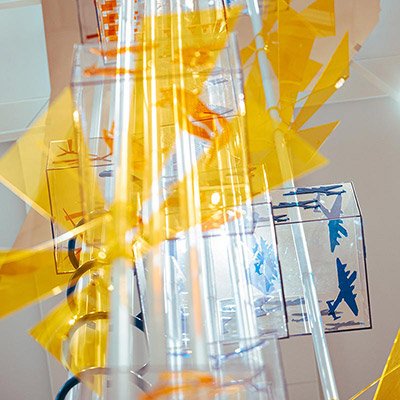
Folkert de Jong andOnkruidenier, Fries Museum

Anti-reflective acrylic
For an optimal presentation and viewing experience
A common type of acrylic is the anti-reflective variety, which reduces reflections and glare. This ensures that visitors can fully focus on the artwork without distractions from reflections. Especially in backlit areas or when used in display cases, this anti-reflective acrylic is ideal for ensuring visual quality.
Applications of acrylic in museums
From displays to custom-made display cases
The versatility of acrylic makes it suitable for a wide range of exhibition solutions:
- Custom display case covers
For museums and galleries looking to protect specific objects, acrylic offers custom solutions such as display case covers, cloches and display cases. In addition to protection, acrylic enhances the aesthetics of the space. - Acrylic enclosures
Acrylic and PETG enclosures are durable, lightweight and suitable for museums ude to their clarity and strength. - Seamless bonding
Thanks to advanced gluing techniques, such as mitre bonding and end-to-end bonding, museum acrylic displays are finished seamlessly and rock solid. This allows full attention to the artwork in question.
Sauerland-Museum, Arnsberg (Germany)

Sustainability and innovation
Recycable acrylic
Sustainability is becoming increasingly important in museum applications. Acrylic is often chosen for its recyclability and sustainable production process. At Pyrasied, our assortment consists of 100% recycled acrylic. Additionally, we offer a take-back service: if an object or material is no longer needed, it can be returned for recycling. It is then transformed into new sheet material. In short, a circular and environmentally friendly solution.
Why acrylic is the ideal choice for art and heritage proctection
With acrylic, you choose a modern, durable and safe material that not only protects but also contributes to the presentation and preservation of artwork. From museum exhibitions to private collections, this material offers unmatched clarity, UV protection and aesthetics.
Acrylic solutions for museums and galleries
Whether you are looking for a specific display case for a valuable object, or need a solution for an entire exhibition, the possibilities are endless.
Curious about the benefits and applications for your collection, exhibit or display?
Contact us today to create a customized solution together that offers both protection and optimal presentation for your artwork.